
Outdoor Play and Learning
Every child deserves the time, space and freedom to play, explore, create and discover.
At Lord Deramore’s, we believe play is an essential part of childhood and an important part of school life. Through our partnership with Outdoor Play and Learning (OPAL) CIC, we are committed to developing exciting, inclusive and stimulating play opportunities that help every child grow in confidence, develop friendships and enjoy the world around them.
Click for a larger .pdf version
Why does play matter?
Children in British primary schools spend around 20% of their school attendance playing — the equivalent of approximately 1.4 years*. Yet play does not always benefit from a strategic, values-led approach across all ages.
At Lord Deramore’s, we believe play deserves the same thought, care and commitment as every other aspect of school life. Through our partnership with Outdoor Play and Learning (OPAL) CIC, we are committed to developing and sustaining high-quality play opportunities for all our children.
Our approach is guided by our Play Policy and our belief that play is essential to children’s happiness, health, wellbeing and development. We want every child to have the time, space and freedom to explore, create, take on challenges, build friendships and enjoy being outdoors.
*Source for the statistic: OPAL CIC, Outdoor Play and Learning — https://outdoorplayandlearning.org.uk/
What is OPaL?
OPaL stands for Outdoor Play and Learning. The OPAL Primary Programme supports schools to develop better, more varied play opportunities, giving children greater freedom to direct their own play.
Play is not just a break from learning. It is an important opportunity for children to explore, experiment, imagine, build, negotiate, make decisions and work things out together.
Sometimes children may be busy creating an adventure with friends; at other times, they may choose to explore independently, observe the world around them or simply enjoy being outdoors. Our aim is to provide an environment where children can follow their interests, make choices and experience the many benefits of freely chosen play.
Why is play important?
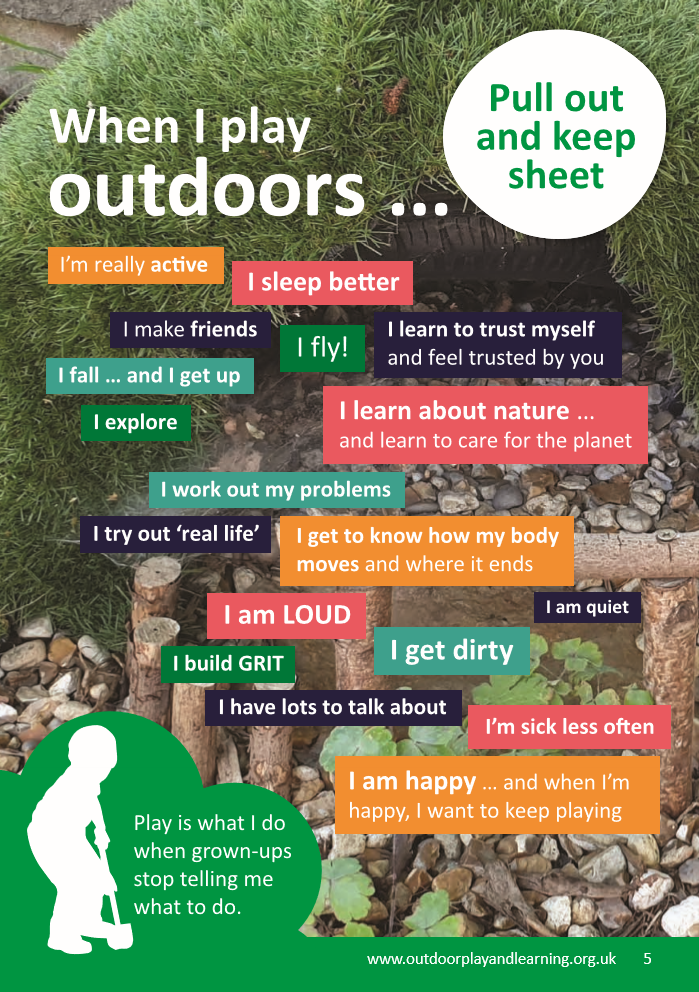
Our Play Policy recognises that play is essential to children’s health, happiness and development. It provides opportunities for children to grow in ways that reach far beyond the playground.
- Friendships and Relationships
- Children learn to cooperate, communicate, negotiate, resolve disagreements and understand different perspectives. Play helps children build friendships and develop respect for others.
- Creativity and Problem-Solving
- From inventing games to building dens, children develop their imagination, curiosity and ability to find solutions to challenges.
- Physical Health and Outdoor Learning
- Moving, balancing, climbing, digging and exploring help children develop physical confidence and skills, while fostering an enjoyment of the outdoors and nature.
- Resilience and Independence
- Children have opportunities to make decisions, encounter challenges, experience different emotions and learn how to manage them. They discover what they can achieve through trying, adapting and persevering.
- Wellbeing and a Love of Learning
- Time to play outdoors gives children the opportunity to enjoy fresh air, release energy, recharge and return to classroom learning ready to engage.
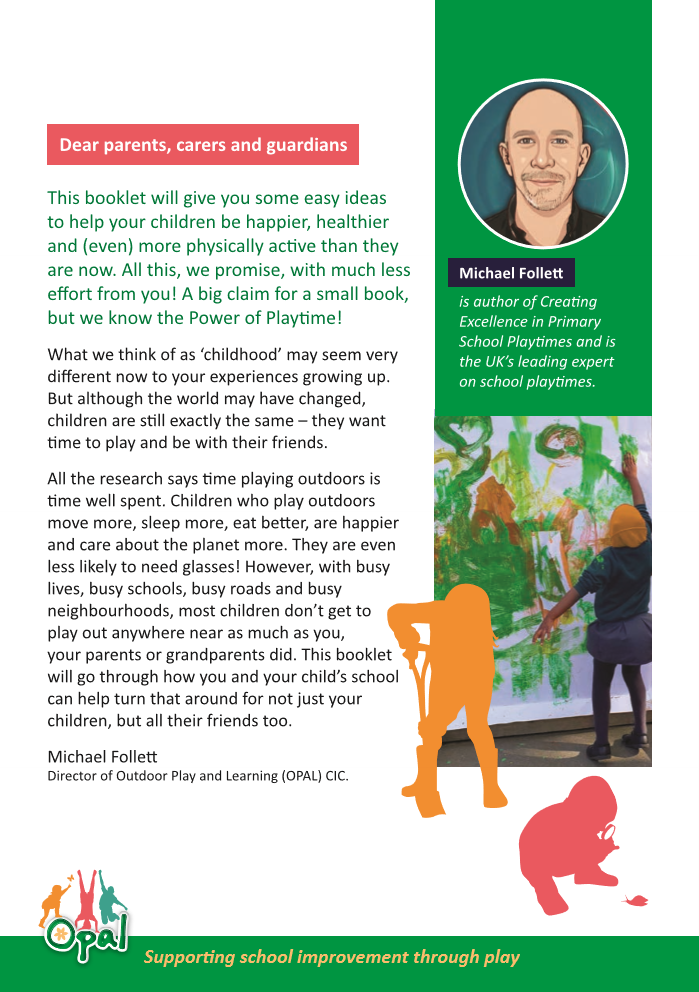
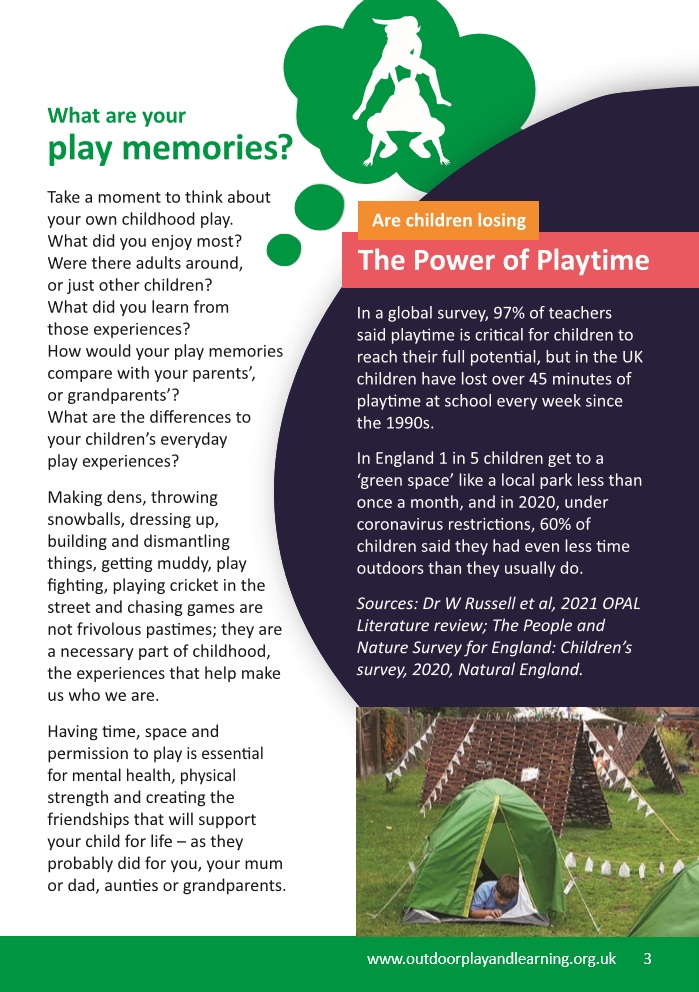
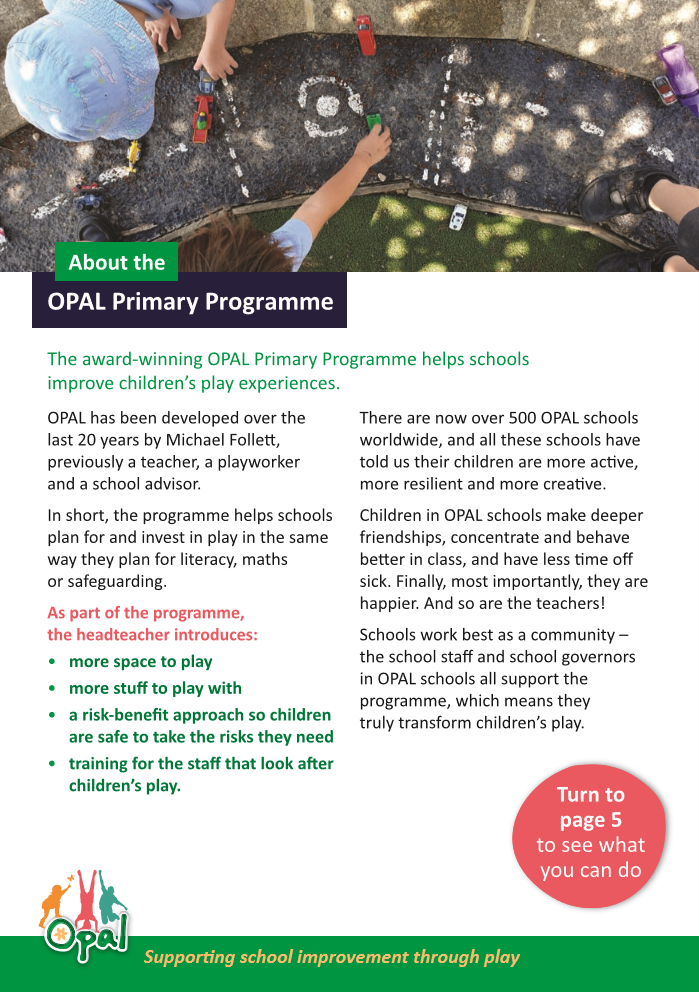
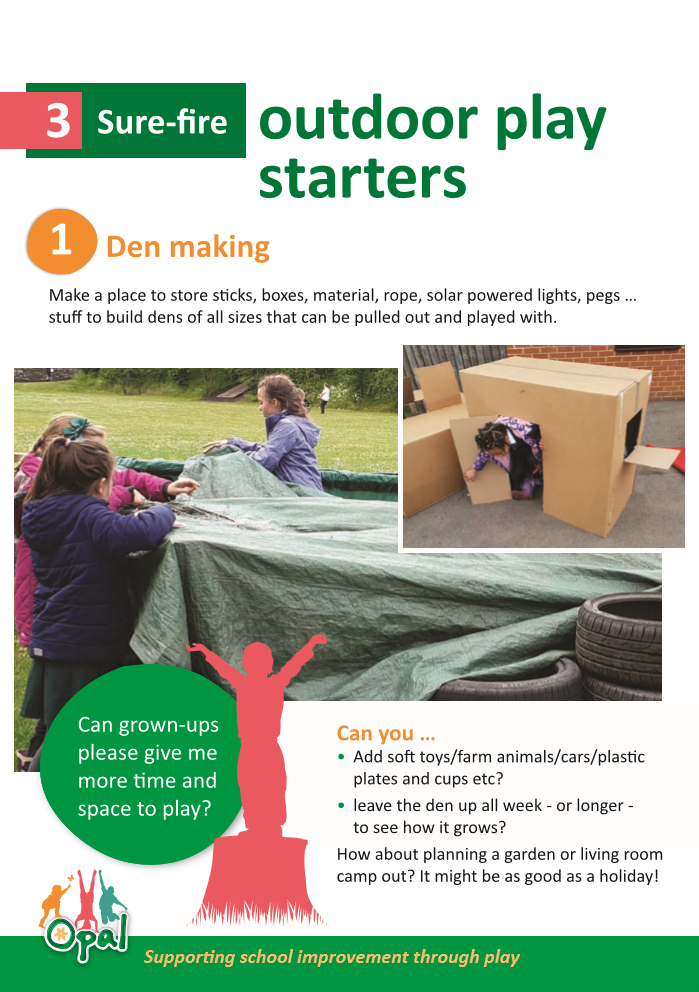
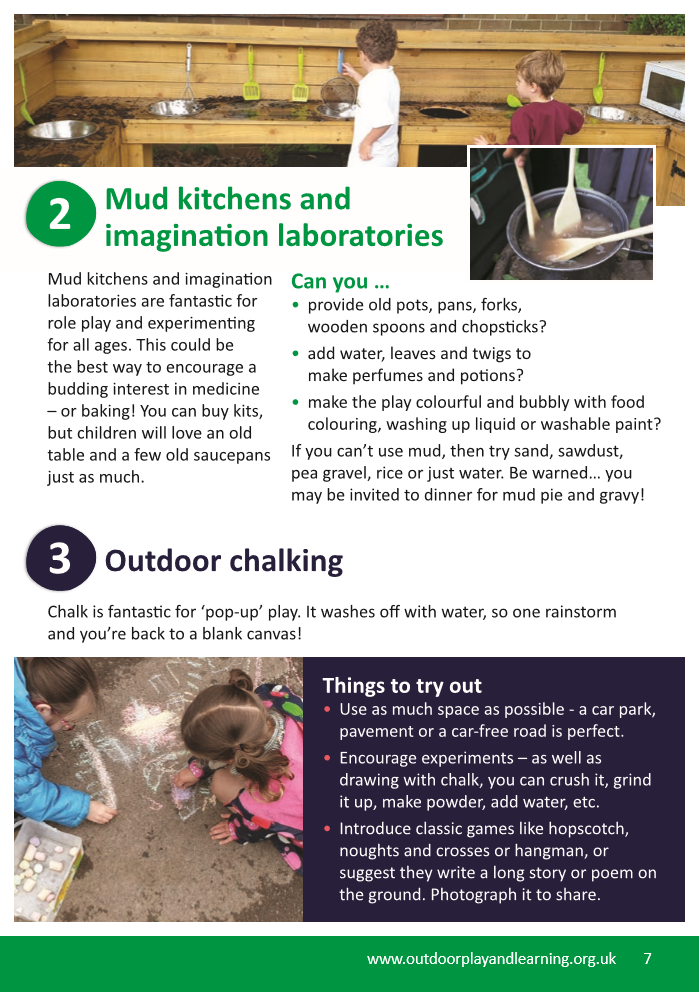
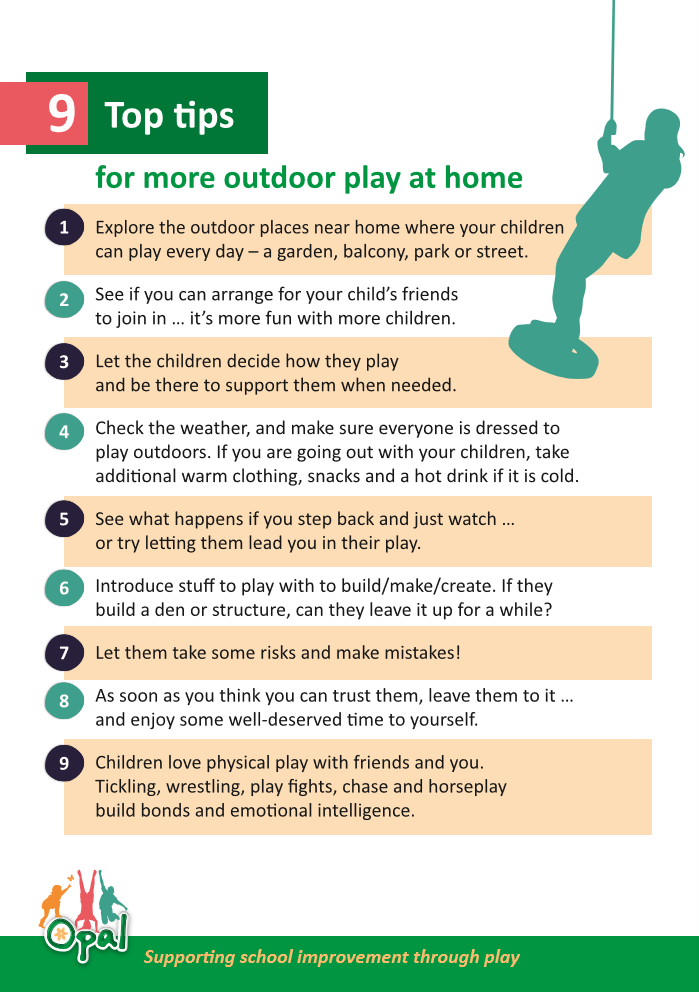
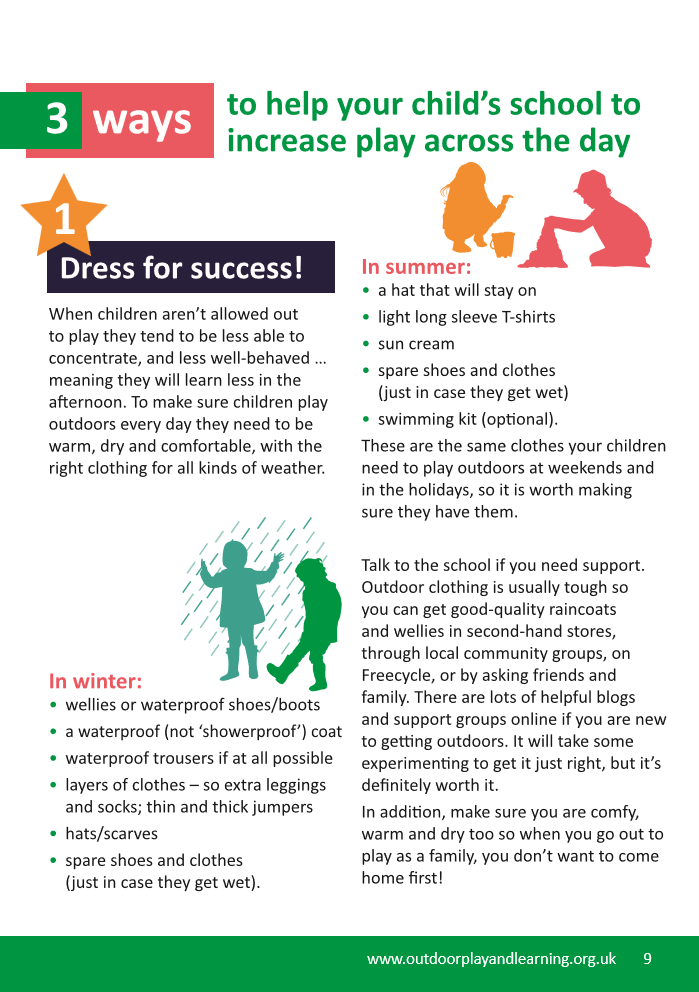
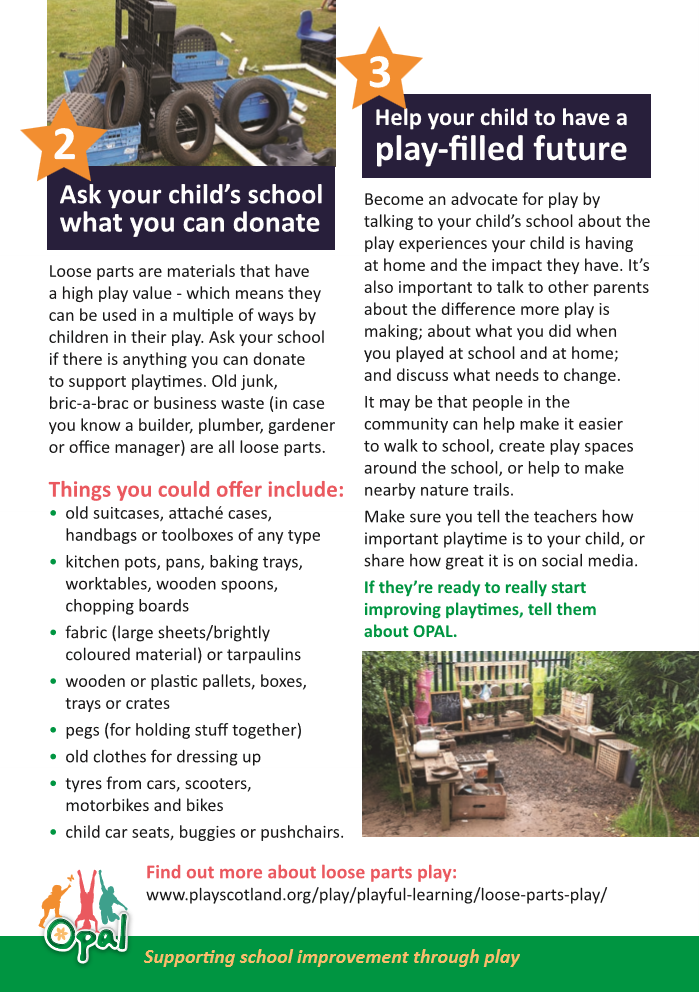
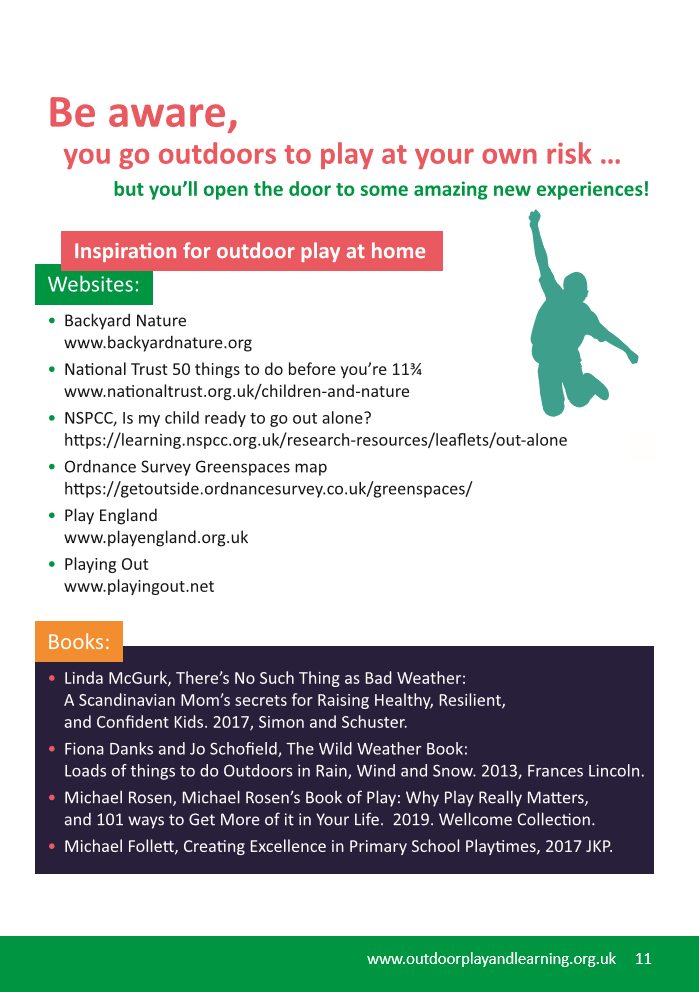
You can read more about this in the OPaL Power of Playtime document. You can click the images below to enlarge, or click here for a .pdf version.
What might play look like?
There is no single way to play. Children have different interests, abilities and ideas, and our play provision aims to give everyone opportunities to find something that excites them.
Depending on the spaces and resources available, play might include:
- Building dens, shelters and imaginative creations.
- Exploring natural materials, sand, mud and water.
- Inventing games and creating imaginary worlds.
- Climbing, balancing, running and taking on physical challenges.
- Designing, constructing, testing and adapting ideas.
- Playing collaboratively, making friends or exploring independently.
Some of the richest play experiences begin with simple materials and a child’s imagination. We want children to have the freedom to explore possibilities, follow their own ideas and shape their play.
We are in the process of developing our school grounds to facilitate play opportunities. We aim to continually improve the quality and diversity of our play environment, providing stimulating spaces that encourage imagination, teamwork, physical confidence and a sense of responsibility for the environment.
Children’s Right to Play
We believe every child has the right to play and that every child’s voice matters.
Our Play Policy recognises the United Nations Convention on the Rights of the Child:
Article 31 — The Right to Play
Children have the right to rest, leisure, play and recreational activities appropriate to their age.
Article 12 — The Right to Be Heard
Children have the right to express their views on matters that affect them and to have those views taken seriously.
We want children to feel that their ideas, interests and opinions help shape their play experiences. Listening to children is an important part of creating a play environment in which they feel valued and involved.
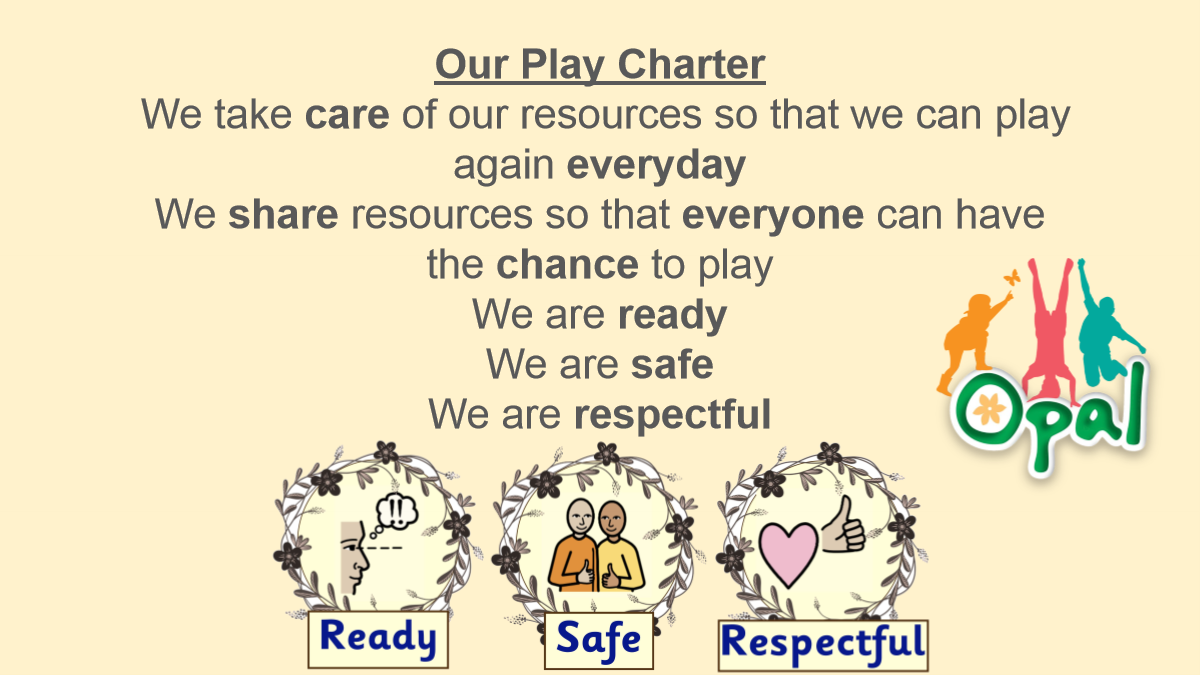
Our children have worked together to create their own Play Charter, setting out the shared values and expectations that help make playtimes enjoyable for everyone. Their charter reminds us to take care of our resources so we can play again every day, share resources so everyone has the chance to play, and always be Ready, Safe and Respectful. By creating the charter themselves, children have helped shape our approach to play and taken ownership of making our playground a happy, inclusive and welcoming place for all.
Balancing Risk and Safety
Play should be exciting, stimulating and rewarding. It should also be thoughtfully managed so children can explore and challenge themselves appropriately.
Our Play Policy takes a risk-benefit approach. This means we do not aim to remove every possible risk from play. Instead, we consider the potential benefits of an activity alongside the risks, taking appropriate steps to manage those risks.
Children need opportunities to develop judgement, confidence and an understanding of how to keep themselves and others safe. Through supported play experiences, they can learn to recognise hazards, make sensible decisions, solve problems and take increasing responsibility for their actions.
Adults remain available to support children’s safety while giving them space to lead their own play, develop independence and experience appropriate challenges.
For more information, you can read the Health and Safety Executive guidance on Children’s Play and Leisure here: HSE Executive: Children’s Play And Leisure – Promoting A Balanced Approach
The Role of Adults in Play
Adults play an important role in creating an environment where children’s play can flourish.
In line with our Play Policy, staff aim to facilitate rather than unnecessarily direct children’s play. They help maintain a stimulating, inclusive environment, make resources and opportunities available, and support children when intervention is needed.
Staff use a combination of supervision approaches so that children can access adult support while still having opportunities for independent, self-directed play.
This balance helps children develop confidence, make choices and take ownership of their play, knowing that adults are available when needed.
OPaL in Action at Lord Deramore’s
You can read our Play Policy on the Policies and Key Documents page of our website.
Outdoor education has always been highly valued at Lord Deramore’s School and all classes have regular Forest School and outdoor sessions, where children are given every opportunity to discover and develop their understanding of the natural world.
As our OPaL provision develops, we will share updates in our OPaL newsletter and via our Facebook page.